
Chinese New Year – A Tribute to China’s Great Tea Traditions
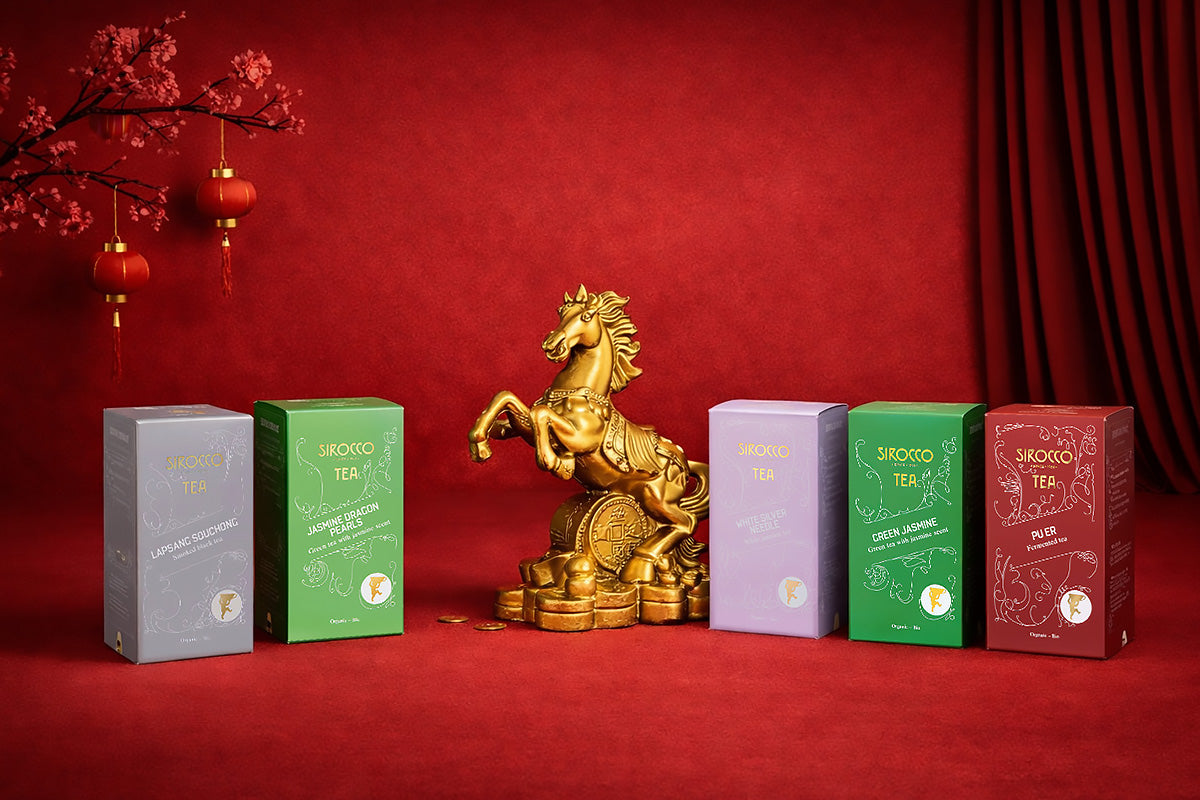
On February 17, Chinese New Year begins – one of the most important celebrations in the Chinese cultural world. This special moment marks the end of the Year of the Snake in the Chinese zodiac and welcomes the beginning of the Year of the Horse.
In Chinese astrology, the Horse stands for vitality, energy, and success. It symbolizes independence, a joy of movement, and the courage to explore new paths. Together with the Tiger and the Dragon, it belongs to the so‑called “Big Three” – the most powerful signs of the Chinese zodiac. The Year of the Horse is therefore seen as a time of momentum, renewal, and forward motion.
Traditionally, Chinese New Year is celebrated with family. Homes are decorated, festive meals are shared, and dishes are served that symbolize happiness, health, and prosperity. Children receive red envelopes filled with money after offering New Year’s wishes to their relatives. One of the most common greetings is “Gong Xi Fa Cai” (恭喜发财), meaning “Congratulations, and may you be blessed with prosperity.” Firecrackers and fireworks accompany the festivities, symbolizing the farewell to the old and the beginning of a new year.
Alongside these vibrant customs, moments of calm and mindful enjoyment play an essential role. For centuries, tea has been an integral part of everyday life in China – an expression of mindfulness, tradition, and a deep connection to nature.
China – The Land of Tea at Sirocco
China is considered the cradle of tea culture. Tea is far more than a beverage here; it is woven into daily life, hospitality, and spiritual tradition. These values also shape the philosophy of Sirocco, which is why China holds a special place within our tea collection.
New to the Collection: Sheng Pu Er from Meng Ku

One of the most exciting new additions to the Sirocco assortment – and a classic example of Chinese tea craftsmanship – is «Sheng Pu Er» (raw Pu Er) from the Meng Ku region. Grown on the unique soils of this area, this Pu Er develops a particularly fragrant character with delicate, subtly sweet aromas. The freshly picked leaves are processed with great care to avoid breakage and unwanted oxidation. After drying under controlled heat, they are traditionally pressed into shape.
The raw Pu Er then matures over two to three years through natural fermentation. During this time, it develops a complex aromatic profile and remarkable depth of flavor. Its exceptional aging potential makes it comparable to fine wine or aged cheese, earning it a place among the true treasures of Chinese tea culture. In the cup, it reveals a golden infusion. On the palate, it is powerful yet smooth and rounded, with refined notes reminiscent of fir forest honey.
A completely different expression is found in «Lapsang Souchong», a smoked organic black tea from the foothills of the Wuyi Mountains. Smoked over pinewood, it gains its unmistakable, smoky character. Enjoyed on its own, it also enhances milder teas and is appreciated in culinary creations as a distinctive aromatic accent. Even with longer infusion times, it remains gentle and never turns bitter.
Few tea traditions are as closely associated with China as the art of scenting tea with jasmine blossoms. This method has been practiced for over a thousand years and requires experience, patience, and a finely tuned sense of timing. Rather than flavoring the tea, it is carefully “scented.”

In traditional Chinese tea craftsmanship, jasmine tea is not created by leaving blossoms in the tea. Instead, an elaborate process known as scenting is used. Jasmine flowers are valued not for their taste, but for their volatile aromatic compounds. During the scenting process, freshly picked blossoms release their fragrance to the tea leaves. After several hours, the flowers have released most of their essential aromas and are then meticulously removed to ensure the tea remains clear, elegant, and perfectly balanced in flavor.
«Green Jasmine» is a delicate organic green tea from the hilly region of Fujian, one of China’s most important tea‑growing provinces. Its refined jasmine fragrance is achieved through multiple scenting cycles with freshly picked jasmine blossoms, which are removed after each round. This process is repeated several times to harmoniously unite the fine tea character with the floral aroma.
A precious rarity is «Jasmin Dragon Pearls». For this tea, only lightly opened leaf buds are harvested in spring. The tea leaves are scented repeatedly with jasmine blossoms before being hand‑rolled, gently heated in a wok, and cooled. The result is small, pearl‑like spheres and a sensually elegant tea experience.
A truly exquisite treasure is «White Silver Needle», an organic white tea of noble quality that was once reserved for emperors and high nobility in China. The tea undergoes only minimal, natural fermentation during the withering process. Known as Yin Zhen (Silver Needle), it is considered one of the most sought‑after white teas in the world. Only young, aromatic shoots are harvested – and only during two to three days each year under ideal climatic conditions. Weeks later, the tea buds are carefully scented with jasmine blossoms, resulting in a mild, floral tea with a majestic character.
We wish you many moments of mindful enjoyment with our Chinese tea classics – inspired by thousands of years of tea culture.