
Hojicha & Matcha: Two Expressions of Japanese Tea
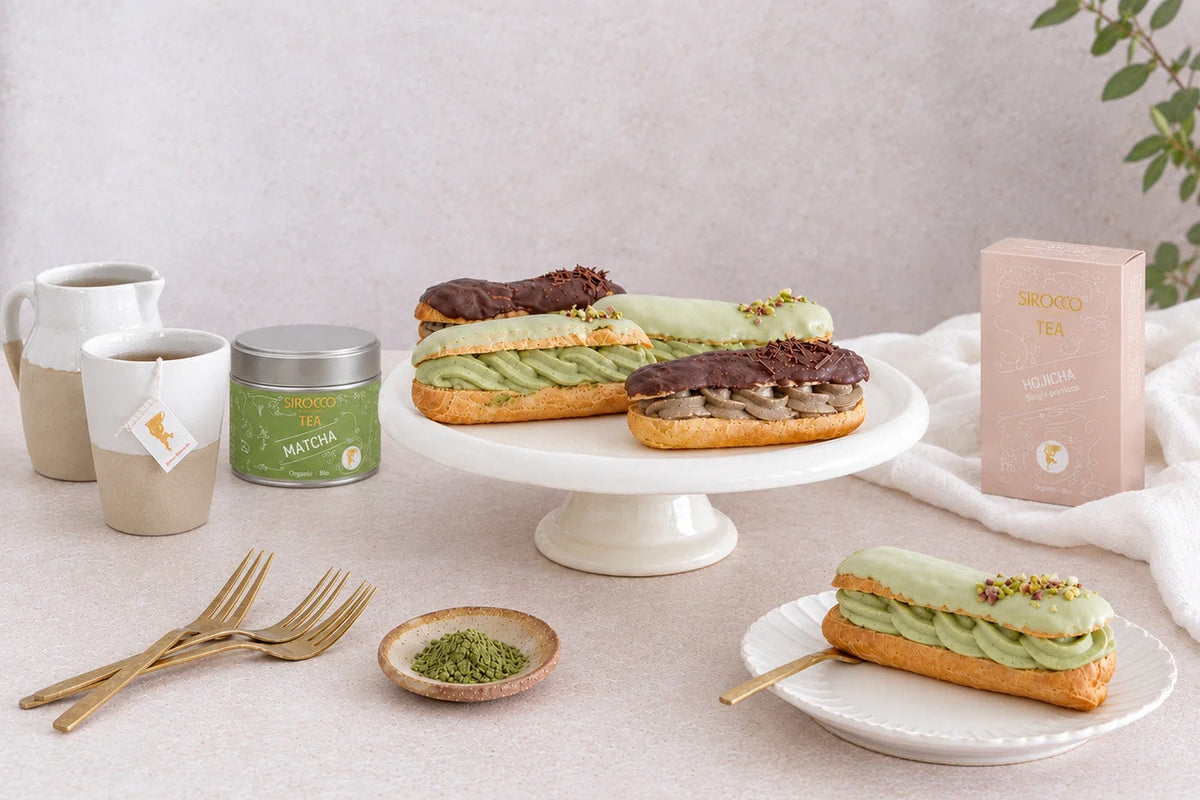
Autumn indulgence doesn’t always have to revolve around cinnamon, apples, and chocolate. Sometimes, the most memorable flavors emerge when tea itself takes center stage. Hojicha and matcha reveal two distinct sides of Japanese tea culture: one roasted, mellow, and almost caramel-like; the other vibrant, green, and delicately intense. Both teas come from the same plant—and yet they could hardly be more different in flavor. It is the processing that transforms the leaves into either roasted hojicha or vivid green matcha.
In Japan, tea is far more than a beverage. It represents mindfulness, precision, and the art of giving a moment your full attention. Matcha and hojicha express this philosophy in very different ways: matcha through its vibrant color and clear intensity, hojicha through its gentle warmth and the comforting aroma of roasted tea leaves.

Hojicha: Roasted Green Tea for Cozy Autumn Moments
Hojicha, which literally means “roasted tea,” is made from green tea leaves that are gently roasted after steaming. It is this additional processing step that gives the tea its distinctive character: warm, mellow, and layered with subtle nutty and caramel notes.
Roasting softens some of hojicha’s grassy freshness and replaces it with a deeper, warmer character. Its aroma evokes roasted nuts, delicate caramel, and warm wood. As a result, hojicha has little in common with the classic image of green tea and, with its roasted flavors, can almost resemble a mild coffee. The two teas also differ in caffeine content: hojicha is generally much lower in caffeine than matcha.
Sirocco Organic-Hojicha is available as a finely ground roasted organic green tea powder from Japan. Like matcha, hojicha is not simply steeped in hot water. Instead, it is whisked with a bamboo whisk using quick “M” or “W” movements until lightly frothy. Thanks to its mellow flavor profile, it is delicious enjoyed on its own as well as in lattes and desserts.
Matcha: Vibrant Green Clarity
When autumn brings warmer, darker and richer Flavours, Sirocco Organic-Matcha offers a fresh green counterpoint. Its delicate bitterness, natural sweetness, and silky-smooth finish make matcha a tea that combines freshness and depth with effortless elegance.
Matcha is also prepared differently from traditional tee in sachets:
The finely ground tea is sifted and then whisked directly into hot—but not boiling—water using quick “M” or “W” movements until lightly frothy. Because the entire tea leaf is consumed, matcha offers a particularly rich and intense flavor experience.

Two teas, two moods
Together, matcha and hojicha reveal just how diverse Japanese tea can be. Hojicha brings nutty, caramel-like roasted notes, while matcha adds color, freshness, and a delicate bitterness. And this pairing works not only in the cup, but in pastry as well.
